
Few assignments test journalists quite like the space beat.
It demands fluency in science, technology, government, risk, and history. It requires reporters to explain complex systems clearly, move quickly during breaking news, and keep the human stakes front and center. For nearly 70 years, NBC News’ coverage of the American space program has offered a case study in how specialized reporting evolves — and why it matters.

The four Artemis II astronauts have written a new chapter in space history. As Orion returned home, Reid Wiseman, Victor Glover and Christina Koch traveled 248,655 miles from Earth, officially surpassing the record for human spaceflight’s farthest distance. This shatters the record set by Apollo 13 in 1970.

“The moon mission is a game changer for space….no longer is NASA just going to the space station,” said Jay Blackman, long-time NBC News senior producer in Washington. “It opens the door to humans living off of our planet and someday maybe Mars. While NASA has some work to do to get there, it will be exciting to watch, not only as a journalist but as an American.”
It is just another historic spaceflight that NBC News has covered from start to finish.
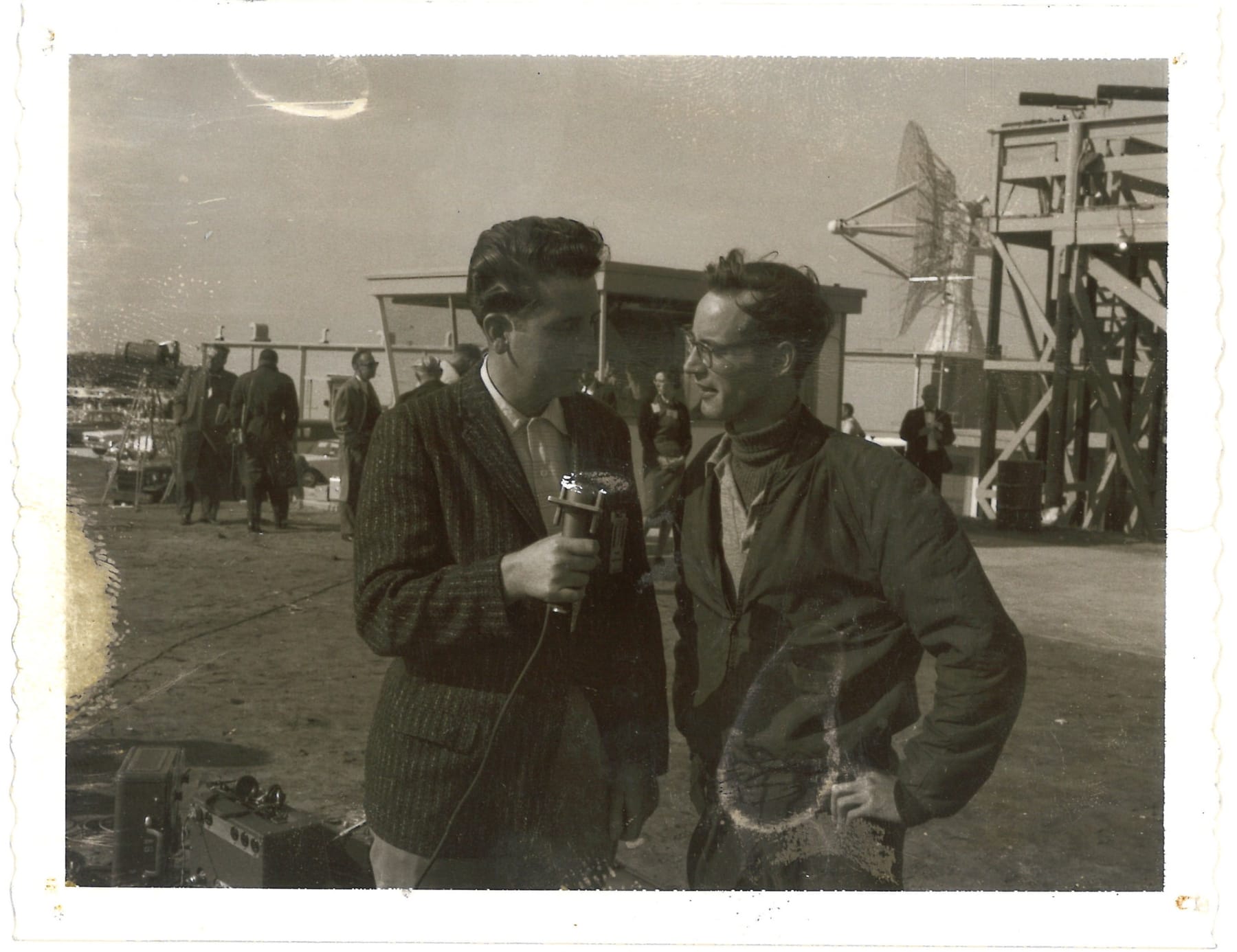
One of the earliest milestones came on November 8, 1958, when NBC News aired a live report from the launch of a Thor-Able rocket in Florida. Longtime correspondent Jay Barbree called it the first live breaking news event from the Cape. The setup was primitive by today’s standards: one early remote reportedly relied on a retrofitted pie truck filled with equipment and positioned near the launch area.
But the fundamentals of good beat reporting were already there. NBC News understood that covering space meant being physically close to the story, technically prepared, and editorially ready to translate a highly specialized event for a general audience.
That kind of coverage did not happen by accident. Producer Jim Kitchell helped shape NBC’s early space broadcasts and pushed for access that allowed television crews to report from closer vantage points at Cape Canaveral. His work reflects a core lesson of specialized journalism: access matters, but so does preparation. Getting near the story is only useful if a newsroom also has the expertise to explain what viewers are seeing.

By the Apollo era, space journalism had become one of the most technically demanding assignments in American news. Apollo 11 was not just a historic mission; it was a complex live broadcast that required producers, directors, engineers, correspondents, and writers to turn a massive and uncertain event into coherent television. When Neil Armstrong stepped onto the moon in July 1969, viewers were not simply watching history. They were relying on journalists to interpret it in real time.
This is one of the defining challenges of any specialized beat: the reporter must serve both the expert and the novice. Coverage has to be accurate enough for insiders, but accessible enough for the public.
Apollo 13 showed another dimension of beat reporting: crisis coverage. What began as a routine mission quickly became a life-or-death emergency after an onboard explosion crippled the spacecraft. In moments like that, specialized knowledge becomes even more valuable. Journalists must understand the systems, identify credible sources, and resist speculation while the facts are still emerging.
NBC News’ reporting during Apollo 13 helped audiences follow not just the danger, but the problem-solving effort underway at NASA. That is another hallmark of strong beat journalism: it does more than deliver updates. It helps people understand processes, consequences, and stakes.

The same principles apply in tragedy. The Challenger disaster in 1986 and the Columbia disaster in 2003 required a very different kind of reporting — sober, careful, and deeply sourced. During catastrophic events, specialized reporters play a critical role because they can distinguish between rumor and fact, explain technical causes, and place a breaking story in historical context.
Those moments also reveal how beat coverage changes with technology. Early space reporting depended on radio reports, limited live television capability, and small field operations. By 2003, the Columbia disaster unfolded in the age of 24-hour cable news and a rapidly expanding digital ecosystem. Today, coverage stretches across broadcast, streaming, websites, podcasts, social media, and mobile video.
That shift has changed not only where journalism appears, but how it is produced. A modern space correspondent may need to deliver a live hit for television, provide analysis for streaming, help shape a digital explainer, and contribute to social storytelling — all while maintaining accuracy on an intensely technical subject.

Yet the core skills remain the same:
- know the beat deeply
- build trusted sources
- explain complexity clearly
- stay calm in moments of uncertainty
- remember that the audience is looking for understanding, not just information
As NASA enters a new chapter with Artemis, the demands on space reporters continue to grow. Audiences want speed, but they also want context. They want visuals, but they also want credibility. They want journalism that captures the wonder of exploration without losing sight of the risks.
That is why the history of NBC News’ space coverage still matters. It shows that specialized reporting is never only about mastering facts. It is about helping people make sense of extraordinary events — whether they end in triumph, tragedy, or something in between.
Now that Artemis II has returned home – we turn our eyes to the next big mission. After Artemis III launches in 2027 for a planned Earth-orbit, the stage will be set for another historic lunar landing in 2028.
NBC News will continue to use those core skills that brought our viewers so many historic moments in space.
After five decades – we return to the moon.